materiais adversos weekend
23–25 October 2026
Bibi Dória
Connor Scott
Inês Campos & Grilo
Luísa Saraiva
Marga Alfeirão
Miguel Bonneville & Sofia Dinger
Natacha Campos
Pedro Barreiro
Reina da Mar

materiais adversos weekend (maw) is an intensive three-day gathering taking place from 23 to 25 October 2026, featuring public sharings from artistic residencies in Minde and Alcanena. It emerges from the desire to sustain an ongoing artistic presence in the region during that time of year, between editions of the materiais diversos festival, reinforcing the territory as a site for contemporary artistic creation beyond major urban centres.
Its first edition, in October 2026, proposes an artistic occupation of the village of Minde, where eleven artists working across a range of contemporary disciplines will develop their projects through a ten-day artistic and research residency. The event functions as a living platform for experimentation and artistic inquiry, inviting audiences into creative processes through open sharings, encounters, conversations and moments of conviviality. Over the course of the weekend, artists, local communities and national and international professionals come together to imagine new ways of creating, living together and engaging in critical reflection.
The event positions itself as a temporary ecology of creation and encounter, where artistic research, practice and critical thinking coexist, reaffirming Materiais Diversos’ commitment to decentralised, sustainable and collaborative cultural models.
As part of the programme, the annual FUTURΛ Seminar takes place, dedicated to critical reflection on curatorial practice and artistic leadership in the performing arts, affirming the importance of curatorial thinking as a critical, situated and transformative practice.

Public programme
Friday, 23 October
15:30—19:00 — MD ❦ Institut français
FUTURΛ Seminar
Artistic work as a milieu, festival as a milieu
with Anne Kerzerho & Mawena Yehouessi
Location: Centro Ciência Viva do Alviela, Alcanena [A1]
[Applications closed]
18:30—19:00 — MD ❦ Cine-Teatro São Pedro
Fantasie minor
by Marco da Silva Ferreira
Location: Jardim das Lagoas, Alcanena [A2]
19:30—20:05
Public sharing of the residency processes:
Miguel Bonneville & Sofia Dinger
Location: Centro Ciência Viva do Alviela, Alcanena [A1]
Saturday, 24 October
10:30—12:30 — MD ❦ Institut français
FUTURΛ Seminar
Artistic work as a milieu, festival as a milieu
with Anne Kerzerho & Mawena Yehouessi
Location: Centro Ciência Viva do Alviela, Alcanena [A1]
[Applications closed]
12:30—13:00
Pitch Accompanied artists by Materiais Diversos:
Gaya de Medeiros & Piny
Location: Centro Ciência Viva do Alviela, Alcanena [A1]
Reserved for programmers.
11:30—13:00 — Walk
do Mar…à terra de Minde
— Rui Gonçalves
Location: Polje de Mira-Minde [A3]
[Registration form]
13:00—14:30 — Lunch
Location: Praça Alberto Guedes, Minde [A2]
15:00—15:30 — MD ❦ Cine-teatro São Pedro
Fantasie minor
by Marco da Silva Ferreira
Location: Largo do Coreto, Minde [A2]
15:45—16:30
Audience Club
with Nuno Preto
Location: Museu de Aguarela Roque Gameiro, Minde [A4]
[Registration form]
15:45—20:10
Public sharing of the residency processes
Bibi Dória
Natacha Campos
Marga Alfeirão
Luísa Saraiva
Connor Scott
Meeting point: 15:35, Antiga Escola EB1 de Minde [A2]
[Bookings open from 6 October]
20:10—22:00 — Dinner
Praça Alberto Guedes, Minde [A2]
22:00—00:00
FESTA with DJ Zé Pedro
in partnership with Casa do Povo de Minde
Location: Espaço Jazz, Minde
Sunday, 25 October
10:00—13:00
Public sharing of the residency processes
Pedro Barreiro
Inês Campos & Grilo
Reina da Mar
Meeting point: Filstone, Fátima [A3]
[Bookings open from 6 October]
Information and access
materiais adversos weekend is free and open to all audiences.
The walk and the Audience Club have limited capacity and require registration via an online form, subject to confirmation of availability.
The public presentation of the residency processes takes place as a continuous route through different locations, has limited capacity, and requires booking by email — gabriel.lapas@materiaisdiversos.com —, subject to availability.
Accessibility
A1 — accessible to wheelchair users · accessible toilet and parking
A2 — uneven flooring
A3 — uneven flooring with possible obstacles
A4 — uneven floor · wheelchair access with assistance · accessible toilet and parking
The FUTURΛ Seminar is an operation supported by the Ministère de l’Europe et des Affaires étrangères and the Institut français, as part of the strategy to promote cultural and creative industries internationally through the PICC programme. With the support of the Institut français in Spain / Embassy of France in Spain, and the Ministerio de Cultura, Instituto Nacional de las Artes Escénicas y de la Música (INAEM), Oficina de Difusión de la Danza (ODD).
Artists
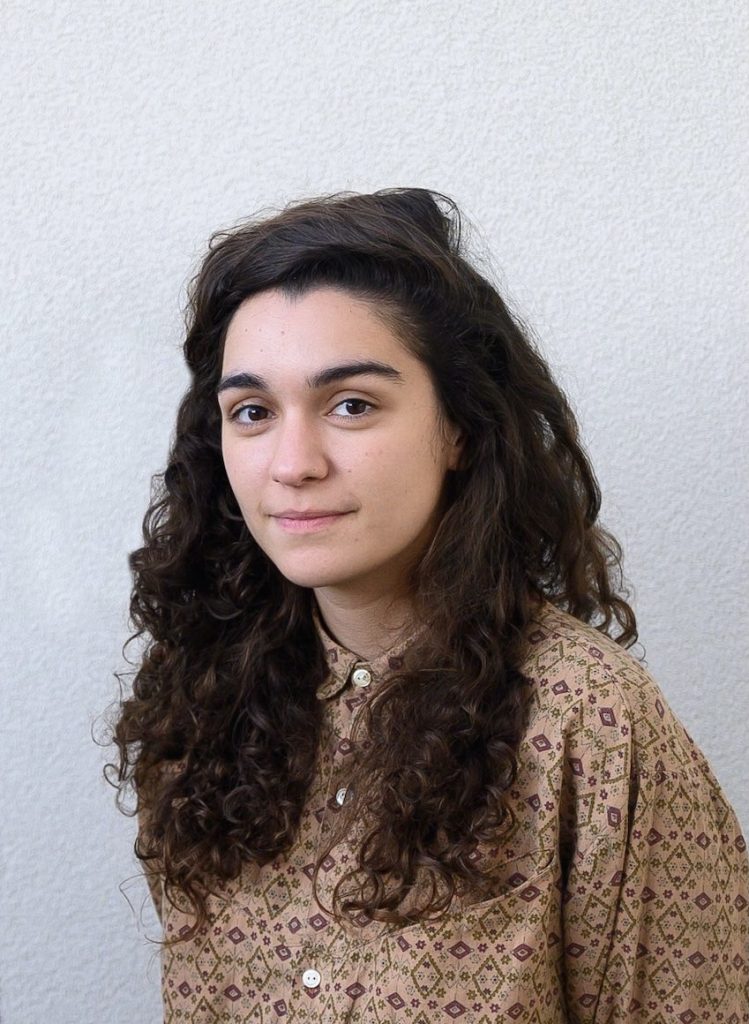
Bibi Dória
Bibi Dória (Campo Grande, 1995) is an interdisciplinary artist with a degree in Dance from UNICAMP (Brazil) and an associate of the Rose Choreographic School (UK) 2024–26. She works at the intersection of dance, performance and cinema. Based in Lisbon (Portugal) since 2018, she develops her own artistic projects, including nome de filme (2021) and cão de sete patas (2024), and collaborates as a performer, assistant director and dramaturg with various artists. Among them is Bruno Brandolino (Uruguay), with whom she shares performance and creation of the work LA BURLA (2022). Her practice engages with themes related to memory, archives, fiction and imagination.
About the residency
The research to be developed is part of the creation of the performance Carnival in the Mud, the final solo within the Marginal Trilogy — a sequence of works exploring the interdisciplinarity between cinema, choreography and performance. It draws on the Brazilian Marginal Cinema movement of the 1970s, and in particular on the emblematic figure of actress and lead performer Helena Ignez.
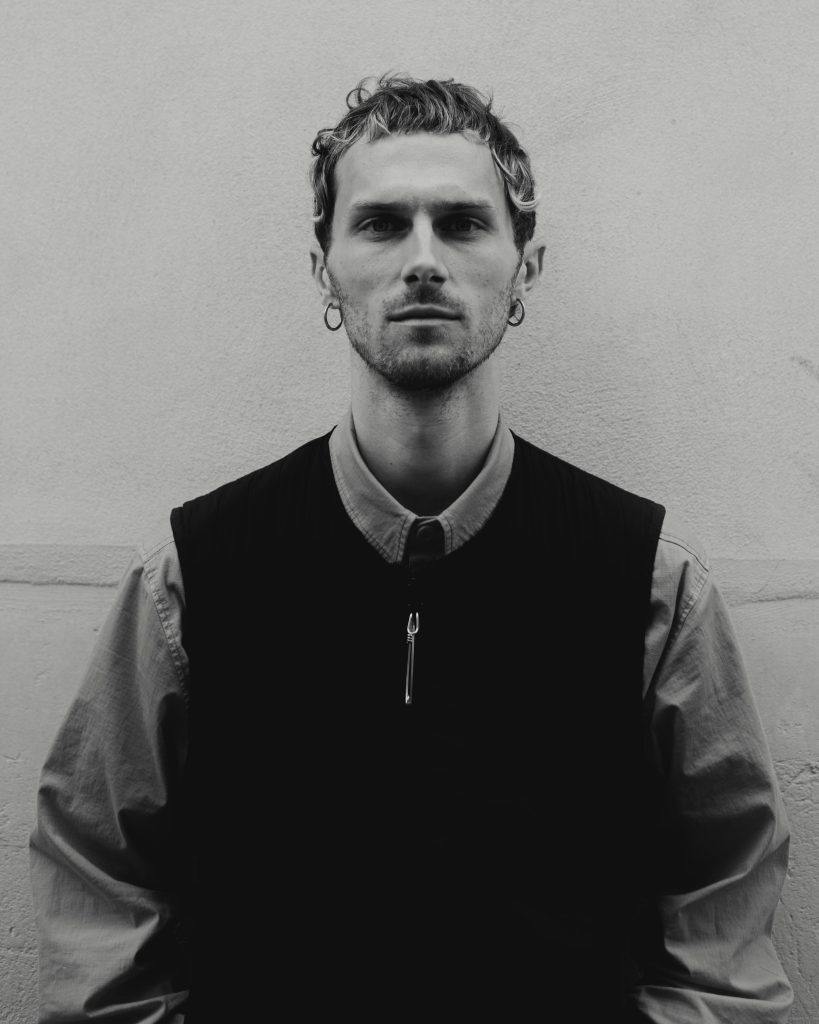
Connor Scott
Connor Scott (Newcastle, 1998) is a dancer, performer and choreographer based in Lisbon, Portugal. Rooted in ballroom social dances, his practice gravitates towards the deviant qualities that dance can invoke, exploring how habitual tendencies, physicalities and normativities might be transformed into alternative modes of expression and empathy. Often working in relation to the genealogy, archive and folklore of dance, his work focuses on forms of presence that emerge through processes of choreography and collaboration. As a dancer, he has performed works by Xavier Le Roy, Theo Clinkard, Michael Keegan-Dolan, Thick & Tight, João Dos Santos Martins, Bullyache, Marcelo Evelin, Sofia Dias & Vítor Roriz among others. Together with Ana Rita Teodoro, he co-hosts the experimental cabaret Primeira Vez at Espaço Parasita.
About the residency
Waltzer (working title) is a work that looks at the force and concept of the spiral and its deviant relationship to time and physicality. Elaborating upon steps and social dance movements that innately foster these helical qualities, the work slides between various kinds of inhabitation and transformation that play on the slipperiness between the inherent and the imposed.
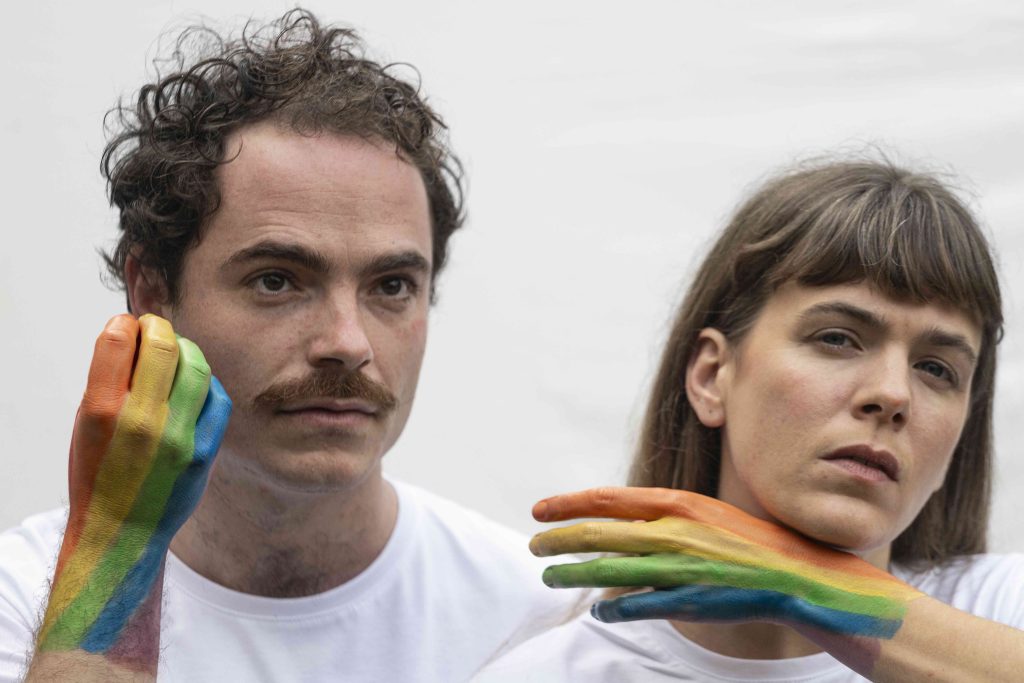
Grilo & Inês Campos © João Pádua
Inês Campos is an artist whose work spans dance, film, music and visual arts, exploring the relationship between the body and its symbolic place, and crossing the real and the unreal through a magical realist imaginary. With her latest creation fio ^, she received the SPA award for Best Dancer. Alongside her artistic creations and collaborations, she is a co-founder of the bands Sopa de Pedra and Tigre, and is currently focused on developing her work as an actress in the field of cinema.
Grilo is a sound artist, performer, composer and poet, interested in utopia and hope as tools of resistance. He creates soundtracks for dance, theatre and film, has released more than a dozen albums, and performs live as an improviser, performer and singer-songwriter. He recently premiered ivu’kar, a multidisciplinary performance about invisibility and care, and published a book of the same name with Sr.teste publishing house.
About the residency
Fazer Ideia No. 3 is the sequel to a series of performances initiated by Inês Campos and João Grilo for non-conventional spaces. Exploring the relationship between the body and symbolic space through a poetic and pragmatic lens, the work brings forward questions around desire and collective purpose. In a continuous gesture where body, sound, text and action intertwine, they construct a practice of transformation, multiplicity and shared imagination that proposes a participatory experience.

Luísa Saraiva ©Dinis Santos
Luísa Saraiva is a choreographer born in Porto, currently based between Porto and Berlin. Her choreographic work explores the language of the body and voice, situated at the intersection between movement and musical composition. She has developed extensive research into Portuguese oral heritage, approached through a critical perspective on the relationships between tradition, gender and power. In recent years, she has led workshops and participated in discussions on mental health in dance. She is co-director of the MULA festival with Cristina Planas Leitão.
About the residency
This new research seeks to consider processes of sound production as models for dynamic relationships between body, circulation, reverberation and transmission. Taking the Leslie speaker and the Hammond organ as choreographic metaphors, this residency initiates an itinerant investigation into the relationships between different musical practices and associated forms of physicality.
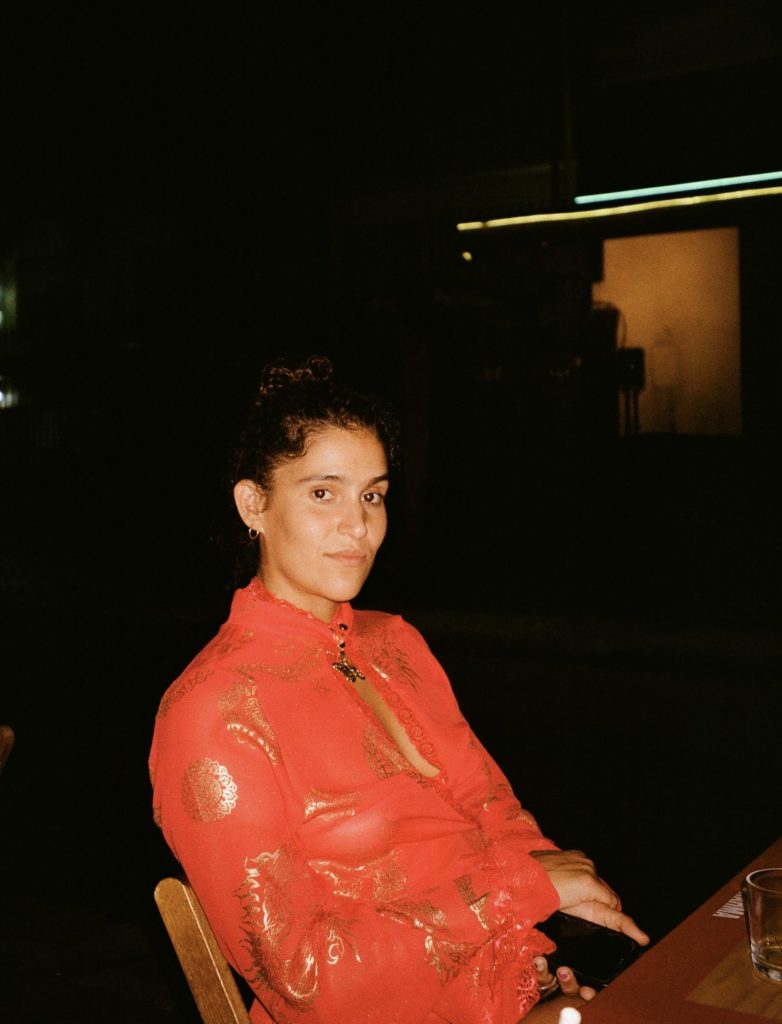
Marga Alfeirão © Mariana Benenge
Marga Alfeirão (Lisbon, 1994) uses media to create safe spaces for the exploration of intimacy and sexuality through dance and performance. Strongly influenced by dance genres and sonic textures from the African diaspora that permeate Lisbon’s social fabric, Alfeirão seeks to reclaim the nuances of the feminine in collective, creating space for a public female intimacy grounded in female sensuality and ways of looking. Lounge (2023) was awarded the 8 Young Choreographers’ Prize. In the same year, she premiered No Biggie Deal, a solo work about Brooklyn rapper Notorious B.I.G., drawing on tabloid culture and nostalgia to pose the question: could Biggie have been bisexual? Her first group work, no c o r a ç ã o dela, premiered in December 2024 at Sophiensaele in Berlin, created in collaboration with a team of eight artists.
About the residency
At a crossroads, before continuing with her 2027 projects, Marga revisits materials and collaborators who have influenced her work from the beginning. She returns to the texts, images, videos and sounds created for no c o r a ç ã o dela, a group piece premiered at Sophiensaele in 2024. One of the central themes of the piece was composed by Nidia, a producer and DJ from Vale da Amoreira and a pioneer of Lisbon’s batida scene. Through this encounter, Marga reorganises the choreographic material, revisiting it through the elements created by the team and opening up new possibilities for its development.
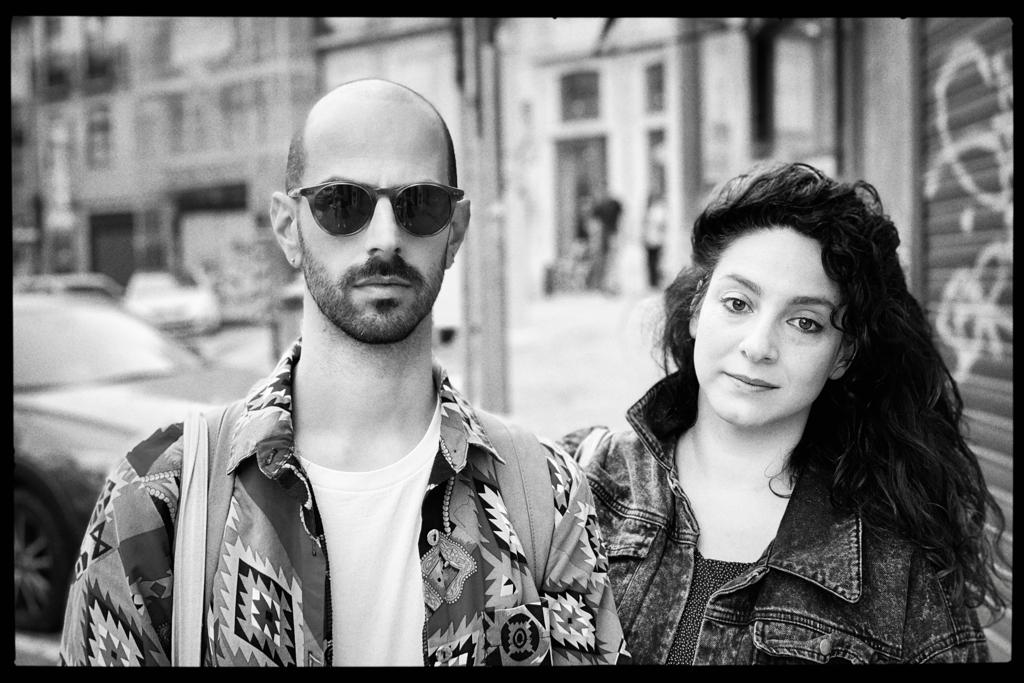
Miguel Bonneville & Sofia Dinger © Joana Linda
Miguel Bonneville is a transdisciplinary artist whose practice spans performance, writing, film and visual arts. Since the beginning of his career, he has worked through long-term cycles and projects in which conceptual research and formal experimentation are interwoven with a deep biographical engagement. In 2025, he was awarded the VS Literary Prize – Ernesto Sampaio.
Sofia Dinger has been working for several years as a performer while creating her own artistic projects along the way. She completed the Das Arts Master’s programme in Amsterdam as a scholarship holder of the Calouste Gulbenkian Foundation. She writes every day. She is deeply interested in ghosts. But there are so many, so many people (which is why no names are mentioned; all have been important). She travels through the world.
About the residency
In 2022, Sofia Dinger and Miguel Bonneville began an artistic collaboration with O Primeiro Sol, a work that drew on Anton Chekhov’s The Seagull and the figures of Nina and Treplev to explore desire, failure and the need to keep creating. From this encounter came a book that existed for only one night, but also a project conceived to unfold over time: four acts, presented four years apart, in which the two artists return to the same questions through the transformations they have experienced in the meantime.
Reparar na Queda is the second act of this cycle. Its title comes from a poem by Daniel Faria: “what hurts the birds / is not being hit, / but that, once hit, / the hunter does not notice their fall” – and evokes the double meaning of reparar: to pay attention and to try to repair.
Four years on, Nina and Treplev are no longer the same – nor are Dinger and Bonneville. Returning to these two figures opens up a space of inquiry into what remains as time passes, and into how we look again at what we already know.
(For the second act, Chekhov prepared the following stage directions:
Nina offering flowers and Treplev with his hat in his hand.)
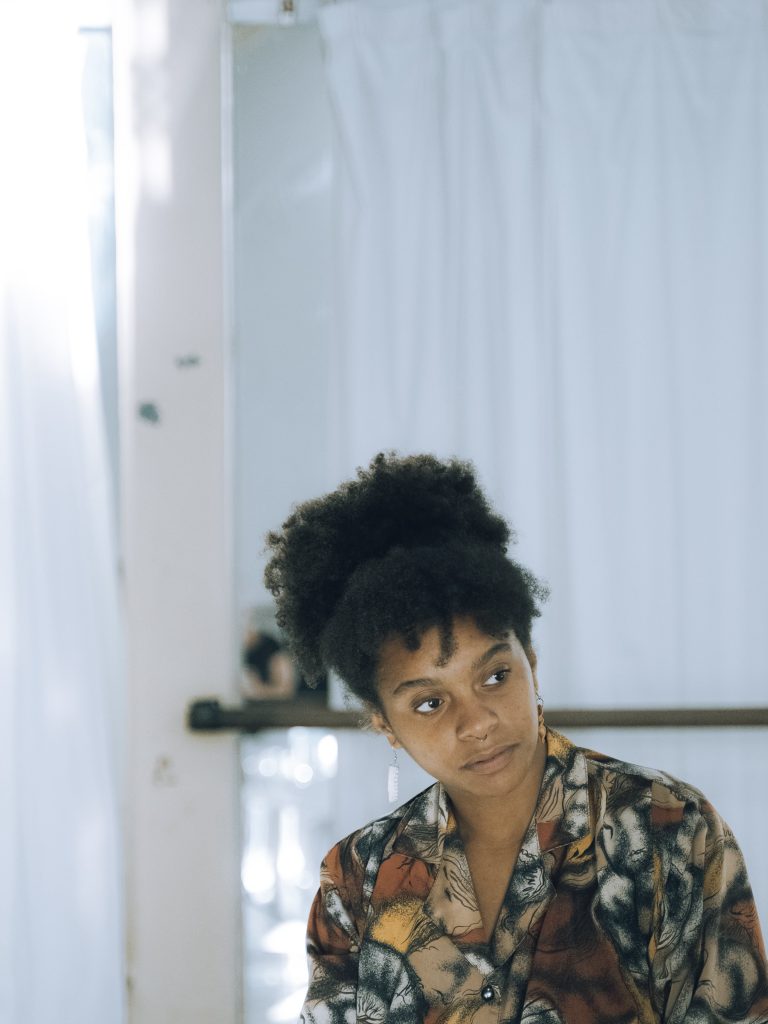
Natacha Campos © Miguel Afonso
Natacha Campos, born in the late 1990s to Angolan parents, works across the languages of dance, theatre and performance. Her research focuses on the tensions between the visible and the invisible, the intimate and the public, seeking common ground within what appears to be antagonistic.
About the residency
Here, she proposes to delve deeper into the concept of the border: is it a line or a territory? A place where two or more realities coexist, or a non-place that belongs to no one? Through this research, she seeks to inhabit this threshold between the comic and the tragic, the intimate and the public.
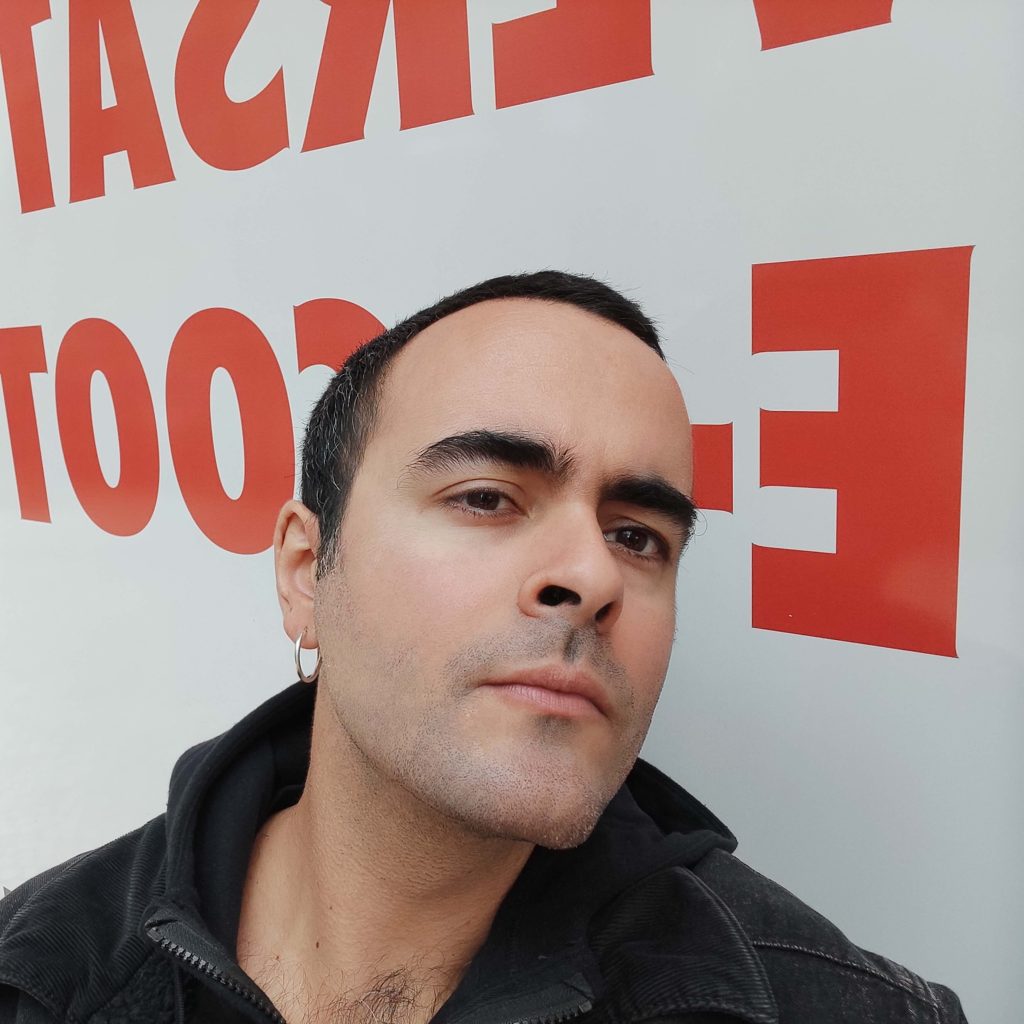
Pedro Barreiro
Pedro Barreiro is an artist whose extensive practice spans work as a director, actor, stage-maker, dramaturg, producer, programmer and curator. In recent years, he has been particularly interested in thinking about performative acts as generators of poetic meaning, in experimenting with the conventions that constitute theatrical forms, and in strategies for dismantling hegemonic systems within contemporary art. Since 2020, he has been continuously creating and presenting the performance an artist is always working. He was artistic director of Teatro Sá da Bandeira in Santarém (2015–2017) and collaborated with Teatro Praga as programmer of Rua das Gaivotas 6 in Lisbon (2019–2022). He has been an associated artist of Cão Solteiro since 2020. He is also a founding member of the collectives Sr. João (2010) and Activo Tóxico (2017). He is artistic director of O Espaço do Tempo and of the Portuguese Platform for Performing Arts, and a member of the Board of Directors of the European Dance Development Network (EDN).
About the residency
In this residency, Pedro Barreiro will be working on Escultura, one of the first pieces in the series The Art Working Series. The Art Working Series is a set of performative, contextual and site-specific works governed by the operative concepts of framing and naming, exploring various aesthetic variations in the relationship between art and labour, while also operating economically and politically at the intersection of these two fields.
Escultura is a piece that takes place in marble, limestone or granite quarries, where the cutting and extraction of a large stone block can be observed. The cutting and extraction of this block becomes the performance witnessed by audiences on site, enacted by quarry workers as part of their everyday labour.
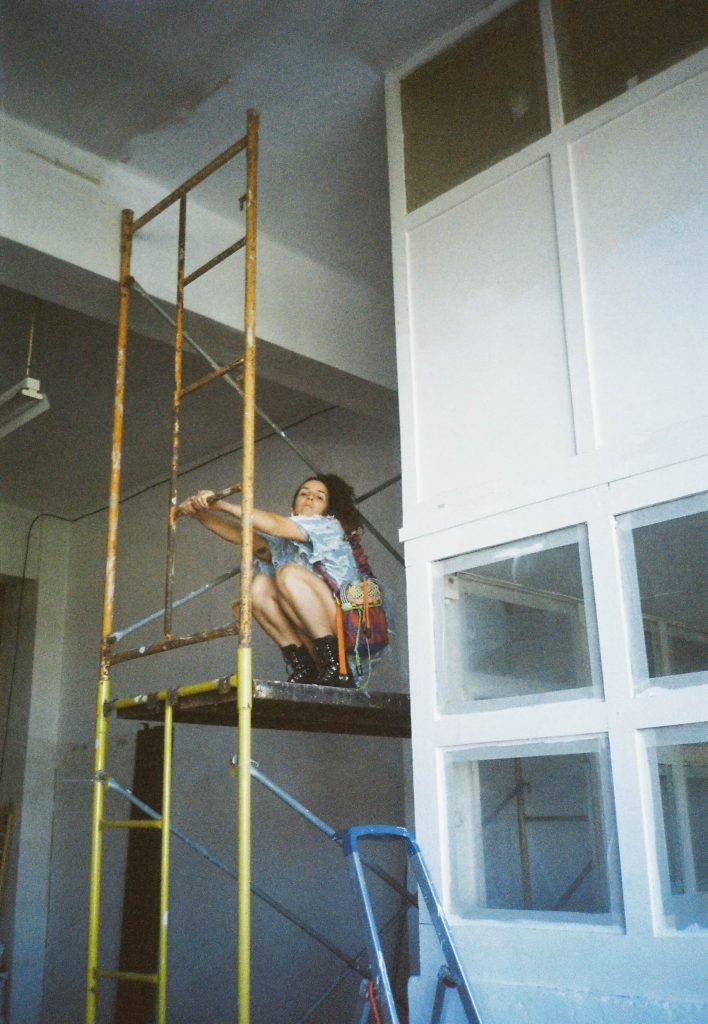
Marina Rei ©Mana Terra
Reina da Mar, born in Serra d’Aire, is the alter ego of a curator working across cultural programming and production, artistic and sound creation. She explores the possibilities of listening as a feminist practice for the composition of archives, mutual support and affect. She is a member of the Pedreira collective in Porto and part of the curatorial team of Tremor Festival in the Azores.
About the residency
Serra Juntas is a metal tool that, after so much use, sometimes looks broken, but still works: two steel rods pressed against each other, taking so many blows from a hammer that they bend out of shape. Growing up in the Serra is like a Serra Juntas: you take the blows, you look broken, you end up bent, but somehow you keep working.
Vamos Juntes – Serras Juntas could be an instruction manual gone wrong, inspired by the well-known pocket almanacs Borda D’Água.
Through encounters, myths, folk remedies, invented (or forgotten) words, noises and disorientation, the residency dives beneath the surface of attention, into the fog of overstimulation, to question and map the meanings and memories of the Serra.
Editorial
The invisible work of what is not a festival
materiais adversos weekend is not a festival. Nor does it aim to be a small festival between editions of festival materiais diversos, which will return in October 2027. It is something else.
It is a gathering that brings an artistic occupation to a close: ten days during which artists live, research, walk, talk, experiment and work in Minde and Alcanena. If the festival is the moment when the territory becomes a stage, fim de semana materiais adversos is an exercise in inhabiting that territory. Before presenting, artists take up residence. Before sharing their work, they stay. Before the performance, they build relationships with those who already live there and with those who come from elsewhere and look on with curiosity and wonder. Bibi Dória, Connor Scott, Grilo & Inês Campos, Luísa Saraiva, Marga Alfeirão, Miguel Bonneville & Sofia Dinger, Natacha Campos, Pedro Barreiro and Reina da Mar inhabit territories and imaginations.
Between festivals, there is a period of time that rarely comes into view. A time for research, trial and error, conversation and waiting. A time when there is no performance yet, but the work is already underway. A time when creation happens before it can be named. This weekend was born precisely from the desire to make that time more visible.
Over three days, artists open up their creative processes to the public while these are still taking shape. They do not present finished answers; they share questions, methods, possibilities and vulnerabilities. We believe that creation does not begin with the premiere or end with the final performance. Research is also a form of production. Thinking is also work. Experimenting is also creating. And programming is about building relationships. It means accompanying artists over time, inviting them to return, building trust, forging new connections and bringing together layers of people, places and experiences. More than selecting works, we are interested in building a context in which artists, communities, institutions and audiences remain in dialogue. It is this invisible work, so often slow and so often absent from narratives about programming, that underpins what we later recognise as a programme.
For this reason, and in partnership with Cine-Teatro São Pedro, we bring the only finished work of the weekend to two squares in Minde and Alcanena: Fantasie minor, by Marco da Silva Ferreira, a renowned choreographer whose career is closely connected to Materiais Diversos. A vibrant and deeply political work that transforms the energy of clubbing and urban dance into a space for encounter, resistance and collective creation. Through its pulse, virtuosity and intimacy, the performance asserts the body as a territory of freedom.
For the same reason, this weekend is not organised around one main event surrounded by parallel activities. Instead, it is built through layers that nourish one another. The Audience Club, led by Nuno Preto; the Matéria Viva group, part of our Training and Capacity-Building Programme in Performing Arts: Practices, Politics and Ecologies of Making; the FUTURΛ seminar with Anne Kerzerho and Mawena Yehouessi; the residencies, public sharings and the presence of national and international programmers all intersect continuously, forming a temporary community in which different working rhythms coexist. Materiais Diversos’ Accompanied Artists, Marga Alfeirão, Piny and Gaya de Medeiros, are also part of this weekend, reinforcing a logic of continuity and ongoing artistic support that lies at the heart of Materiais Diversos’ work.
Each artist inhabits Minde and Alcanena, gets to know people, associations and local groups, explores the landscape and allows themselves to be transformed by the context, while also transforming it. Places and people cease to be a backdrop and become living material for creation. These relationships also develop beyond working hours: around the table, over a shared meal, on a walk, in a conversation after a performance or simply in the time spent together. At a moment when spaces for coming together seem increasingly rare, we want to make room for shared time. We believe that real impact often happens far from the stage lights: in a residency that has yet to discover what it will become, in a future collaboration or when an artist returns because they have found a place here where they can continue their research. It is this ecology of continuity, trust and conviviality that we seek to build.
This weekend is only possible thanks to the trust of the artists, our extraordinary team, local associations and groups, partner organisations, patrons and funding bodies who believe that researching, experimenting and building relationships are fundamental ways of shaping the future. Special thanks go to the Municipality of Alcanena for its vision and long-term commitment to this project, recognising and respecting the autonomy of Materiais Diversos as an independent cultural organisation. And to all our new and longstanding partners who, through different forms of support, continue to make this project possible.
Cristina Planas Leitão
Artistic Director of Materiais Diversos